Food has always held a central place in African and immigrant households. It carries memory, tradition, comfort, and identity. Increasingly, it is also becoming one of the most important tools in chronic disease prevention. Hypertension and diabetes continue to affect African and immigrant families at higher rates than the general population, yet conversations about prevention often leave out the role of culture, food access, and community based education.
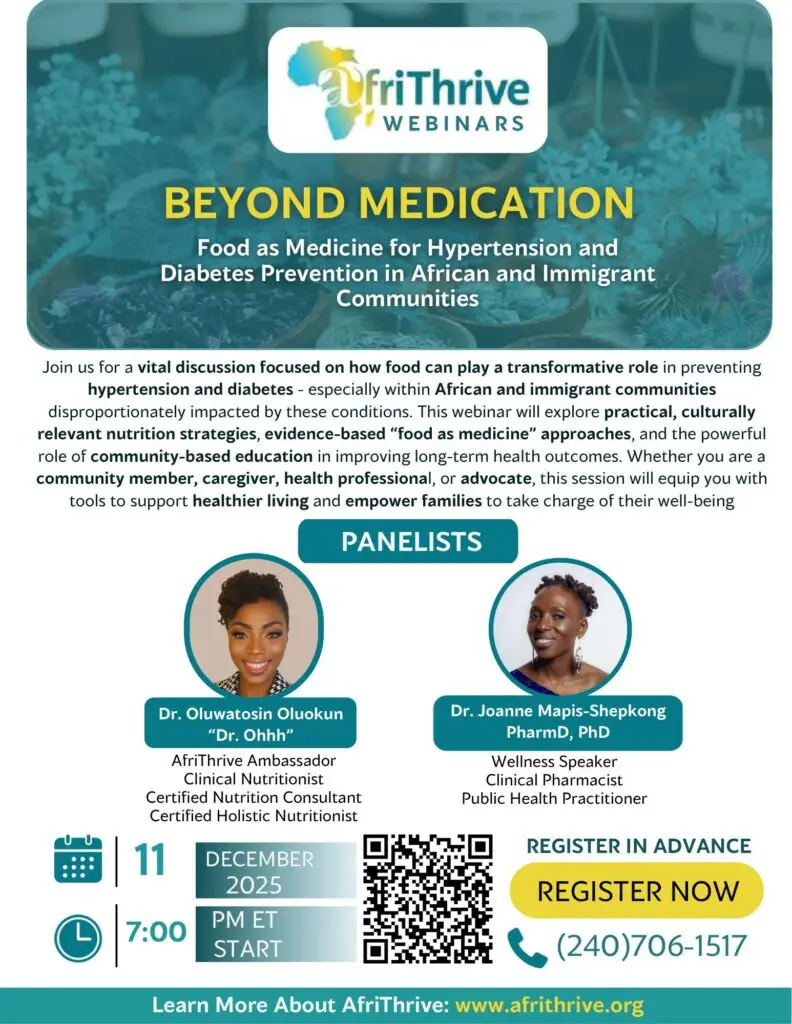
AfriThrive’s upcoming webinar, Beyond Medication, focuses on these gaps and brings forward a perspective that is often missing in public health discussions. Instead of leading with medication or clinical advice alone, the conversation centers on the foods people know, trust, and prepare every day. It highlights how culturally familiar ingredients can support healthier living when used with intention.
Why Food Matters in Preventing Hypertension and Diabetes
Research continues to show that nutrition plays a critical role in managing and preventing chronic illness. Yet for many African and immigrant families, the standard nutrition advice does not reflect their lived realities. Traditional diets, cooking methods, and cultural foods are rarely included in mainstream guidance.
This is where food as medicine offers a more thoughtful approach. It considers all the factors that shape how families eat, from cultural practices to affordability and access. It also recognizes that prevention does not begin in a clinic. It begins at home, in the kitchen, and in the community.
During the webinar, panelists will explore ways families can use everyday foods to support stable blood pressure, improve insulin response, and build healthier routines. They bring scientific expertise, cultural understanding, and practical strategies that meet families where they are.
Trusted Voices Leading the Conversation
Two respected health professionals will guide this discussion.
Dr. Oluwatosin Oloukun, known widely as Dr. Ohhh, is a Clinical Nutritionist and AfriThrive Ambassador who blends evidence based nutrition with culturally grounded guidance. Her work focuses on helping families make small, sustainable food changes that protect long term health.
Dr. Joanne Mapis Shepkong, PharmD, PhD, is a Clinical Pharmacist and Public Health Practitioner who understands firsthand how chronic conditions develop in underserved communities. She emphasizes the importance of prevention and the need for culturally responsive health education.
Their combined experience reflects AfriThrive’s commitment to providing community centered guidance that respects cultural identity while promoting well being.
Reimagining Prevention Through Community Education
This webinar is part of a larger shift in how organizations are addressing chronic illness. Instead of focusing solely on treatment, more attention is turning to early prevention rooted in food, culture, and community leadership.
For many African and immigrant families, prevention is most effective when the information feels familiar and the solutions feel possible. That means using ingredients people can find in local markets, adapting beloved dishes rather than eliminating them, and understanding that food connects people to both heritage and health.
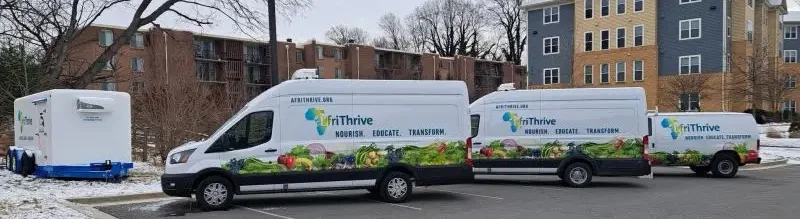
AfriThrive’s work sits at that intersection. It combines nutrition guidance with access to culturally relevant produce through its food distribution programs and community farm. The goal is not just to share information. The goal is to make healthier choices visible, accessible, and meaningful.
Looking Ahead
The challenges around hypertension and diabetes will not disappear quickly. Yet moments like this webinar offer a pathway forward. When health education is grounded in culture and guided by experts who understand community needs, prevention becomes more achievable.
Families deserve guidance that respects their traditions and equips them with tools for a healthier future. This conversation is one step in that direction.
The Beyond Medication webinar takes place on December 11 at 7:00 PM ET. Community members, caregivers, and health professionals are encouraged to participate.
Learn more at www.afrithrive.org.
Frequently Asked Questions
What is the concept of food as medicine?
Food as medicine focuses on using whole foods and culturally familiar ingredients to prevent and manage chronic illnesses. It emphasizes nutrition, lifestyle habits, and community based education as core components of health.
Why are African and immigrant communities disproportionately affected by hypertension and diabetes?
A combination of factors contributes to higher risk, including limited access to culturally relevant healthy foods, high stress levels, structural inequities, and reduced access to preventive care. Culturally aligned nutrition guidance can help close these gaps.
Can traditional African foods support chronic disease prevention?
Yes. Many traditional African foods are nutrient dense and rich in fiber, antioxidants, and minerals that support blood pressure control and blood sugar regulation. The key is learning how to prepare these foods in ways that promote long term health.
Who should attend the Beyond Medication webinar?
Community members, caregivers, healthcare providers, and anyone interested in nutrition, prevention, and culturally grounded health education will benefit from this session.
What will participants learn?
Participants will learn practical nutrition strategies, culturally relevant food as medicine approaches, and ways to support healthier living within their families and communities.